You check the battery voltage with the engine running and get a different number than you saw yesterday. Is the alternator failing? On a vehicle with smart charging, a changing reading can be perfectly normal.
Modern charging systems often adjust output based on the battery's condition and the vehicle's electrical needs. That gives them more flexibility than a system trying to hold one narrow target all the time. It also means a single voltage reading is an incomplete way to judge charging performance.
Smart Charging Uses Electronic Control Of Alternator Output
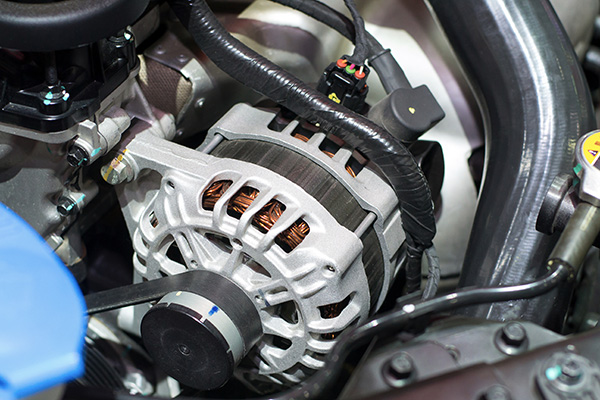
An alternator turns the engine's mechanical energy into electricity. Its output powers the vehicle and helps charge the battery. With smart charging, control units can request output changes instead of relying on a traditional regulator that reacts only to voltage at one point in the system.
The strategy depends on the vehicle. The system may consider battery condition, temperature, electrical load, and operating state when it decides what to request. A reading that looks low next to an older car's may be intentional at that moment. The real question is whether the system meets its commanded output and keeps the battery in the condition it needs.
Battery Sensors Help Smart Charging Decide What Is Needed
Many vehicles use a battery sensor that measures current, voltage, and temperature. The system uses that information to estimate the battery's charge and condition. Those estimates help determine how much charging is needed and whether certain energy-saving functions can run.
A damaged sensor, a poor connection, or incorrect battery information can throw off those decisions. The battery can also be weak even when the alternator can produce plenty of output. Testing should look at the battery and the charging controls together. If you replace the alternator based only on a surprising number, you may leave a sensor, wiring, or battery problem untouched.
Alternator Voltage Can Change With Battery Temperature And Charge
The battery's temperature and state of charge influence how the system should replenish it. A battery recovering from a cold start may need a different charging response than one that's warm and already well charged. The control strategy depends on the battery type and the vehicle's requirements.
That's why comparing readings taken under different conditions can mislead you. Engine temperature, battery temperature, time since starting, and recent use can all be different. A technician needs the manufacturer's expected operation and control-system information. No single voltage number proves every modern charging system is healthy under every condition.
Electrical Loads Affect The Smart Charging Strategy
Lights, heated windows, blowers, seat heaters, and other equipment change electrical demand. The system can adjust alternator output to supply those loads and manage battery charging. Engine speed and the alternator's available capacity also affect what it can deliver at any given moment.
Switching on accessories and watching the meter can offer a clue, but it isn't a complete alternator test. Wiring resistance, battery condition, and the commanded strategy all matter. Tell us whether dim lights or low-voltage symptoms show up only at idle, after a long drive, or with certain equipment running. That pattern can help guide the checks.
Some Smart Charging Systems Adjust Output During Deceleration
Certain systems increase electrical generation during deceleration and reduce alternator load under other conditions when the battery's state permits. The aim is to manage how much energy the engine spends while still meeting electrical requirements. The exact strategy varies, so don't assume it applies to every vehicle with electronic charging controls.
None of this turns a conventional alternator into a hybrid traction motor. It describes how the vehicle manages its electrical generation. Some hybrids and electric vehicles supply their low-voltage system through different equipment, such as a voltage converter, so you need to identify the architecture before applying an alternator-based explanation or test.
Battery Replacement Can Affect Smart Charging Information
The replacement battery has to meet the vehicle's specified type and capacity. A vehicle designed for an AGM battery shouldn't get a different type just because it fits the tray. Some systems also need registration, resetting, or an adaptation procedure after a replacement.
Before battery or charging work, confirm:
- The correct battery specification for the vehicle.
- Whether replacement information must be entered into the system.
- The condition of the battery sensor, cables, and connections.
The required procedure varies by model. Correct information helps the charging system manage the battery that's actually installed.
Smart Charging Faults Need More Than One Voltage Reading
A battery warning, repeated slow starting, loss of electrical functions, or a battery that keeps going flat deserves testing. The cause could be charging output, battery health, cable resistance, or an electrical draw while the car is parked. Don't use normal voltage variation to brush off new or persistent symptoms.
We can compare what the system requests with what it actually delivers, inspect connections, and test the battery under suitable conditions. If a charging warning appears while you're driving, follow the manual. And don't disconnect a battery cable with the engine running to test the charging system. That's not a suitable test on a modern vehicle and can damage electrical components. Specified testing procedures exist for a reason.
Get Smart Charging Inspection In San Jose And Milpitas, CA, With Alvin's Auto Center
Alvin's Auto Center serves drivers in San Jose and Milpitas, CA. We can inspect battery and charging issues, check how the control system is operating, and explain whether your vehicle needs a battery, wiring repair, alternator work, or another service.
Contact us to schedule an inspection of your vehicle's smart charging or starting concerns.