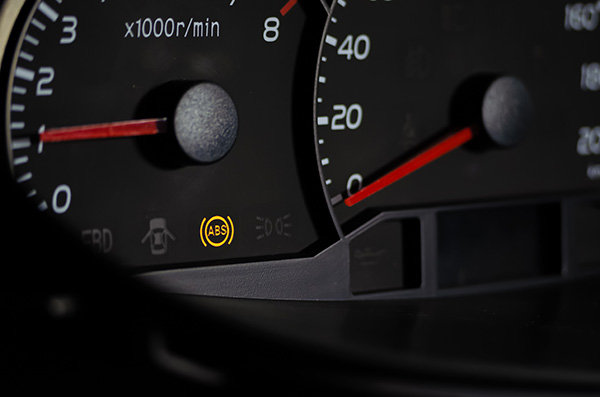
Seeing the ABS light pop on can mess with your confidence fast. The brakes still seem to work, the pedal still feels normal, and the car stops, so it is easy to assume it is not a big deal. At the same time, it is hard to ignore a warning light tied to braking.
Here is the practical truth. In many cases, you can still drive the vehicle carefully, but your anti-lock braking system may not be available when you need it.
That difference matters most in hard stops, wet roads, or sudden panic braking.
What The ABS Light Means In Plain Terms
ABS is designed to help prevent the wheels from locking up during hard braking. When a wheel locks, the tire slides instead of gripping, and that is when steering control can fade. ABS rapidly pulses brake pressure so the wheel keeps turning just enough to maintain traction.
When the ABS light is on, the system has detected a fault and has likely disabled ABS operation. Your normal braking usually still works, but you may lose the extra control ABS provides in slippery or emergency conditions.
Some vehicles also link traction control and stability control to the ABS system. If those lights appear too, it often points to the same root cause.
Is It Safe To Drive With The ABS Light On
If the ABS light is on by itself and your brake pedal feels normal, the vehicle can often be driven with caution to a shop. Drive with extra space, avoid aggressive braking, and be more careful in rain or on loose surfaces.
If the brake warning light is also on, or the brake pedal feels soft, spongy, or unusually low, treat it as a different situation. That can indicate a hydraulic brake problem, and it is safer not to keep driving.
Also pay attention to any grinding noises, pulling, or a pedal that pulses during normal stops. Those symptoms suggest the issue is not only a warning light.
Most Common Reasons The ABS Light Comes On
Many ABS problems come from sensor issues, not major brake failures. Each wheel typically has a speed sensor that monitors wheel rotation. The system compares those signals and uses them to control braking.
Here are common causes we see:
- A wheel speed sensor that has failed or has a damaged wire
- Dirt, rust, or debris on the sensor or tone ring
- A cracked tone ring or damaged wheel bearing affecting sensor readings
- Low battery voltage or charging issues causing system faults
- ABS module or pump motor faults in less common cases
The key point is that the ABS system is picky. A small signal problem can trigger the light even when the brakes feel fine.
Wheel Bearings And Tone Rings: The Sneaky Causes
Wheel speed sensors do not work alone. Many rely on a tone ring or magnetic encoder built into the wheel bearing. If a wheel bearing develops play or the encoder surface gets damaged, the ABS signal can become inconsistent.
This can happen without an obvious bearing roar at first. Some drivers only notice the ABS light appearing intermittently, then staying on. If the light comes and goes, it often points to a sensor signal that is dropping out under certain conditions.
Catching this early can prevent bigger issues, because a failing bearing can eventually become noisy and unsafe if it worsens.
Why The ABS Light Might Appear After Brake Work
Sometimes the ABS light comes on after the brakes are serviced. This can happen if a sensor wire was tugged, a connector was not seated fully, or rust and debris were disturbed near the sensor.
It does not mean the brake job was done wrong, but it does mean the system is seeing a signal it does not like. A quick inspection of sensor wiring and mounting areas often reveals the culprit.
This is also why it helps to avoid power washing directly into wheel sensor areas. Water intrusion can cause corrosion at connectors over time.
What To Watch For During Normal Driving
If you are deciding whether to drive it in, focus on how the brakes feel, not just the light. Normal braking should feel consistent, with a firm pedal and predictable stopping.
If you experience any of these, take it seriously:
- Brake warning light on in addition to ABS light
- Pedal feels soft or sinks toward the floor
- Car pulls hard to one side when braking
- Grinding, scraping, or a loud metal noise during braking
- ABS engages unexpectedly at low speed on dry pavement
Unexpected low-speed ABS activation can happen with faulty sensor signals, and it is a strong reason to schedule an inspection soon.
How ABS Problems Get Pinpointed
The system stores fault information that points to the circuit or wheel where the issue is occurring. From there, the next step is inspecting the sensor, wiring, and related components. If a sensor is not reading correctly, it is important to confirm whether the sensor itself is bad or if a bearing or tone ring is causing a false reading.
This is where a careful inspection saves money. Replacing a sensor when the real issue is a failing bearing often leads to repeat visits. Confirming the full picture prevents that.
Get ABS Light Help in San Jose and Milpitas, CA with Alvin's Auto Center
We can inspect the ABS, verify what is triggering the warning, and explain the most practical fix based on what we find so you can brake with confidence again.
Schedule a visit with Alvin's Auto Center in San Jose or Milpitas, CA, and we’ll help you get the ABS light handled the right way.