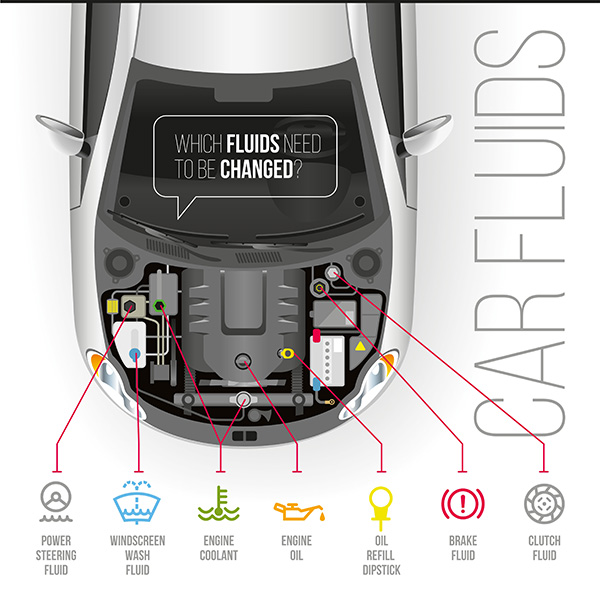
Old fluids usually do not make a big announcement. They do not always make noise right away, and they may not trigger a warning light until something is already wrong. The car keeps driving, so the fluid gets ignored.
That is the problem. Engine oil, coolant, transmission fluid, brake fluid, power steering fluid, gear oil, and differential fluid all do more than fill space. They clean, cool, lubricate, seal, regulate pressure, and carry heat away from parts that are expensive to replace. When those fluids age, the wear often starts quietly inside the system.
Engine Oil Gets Dirty Before The Engine Sounds Bad
Engine oil has a hard job. It lubricates bearings, timing components, camshafts, piston rings, turbochargers on equipped vehicles, and many small passages that need clean flow. It also carries away heat and holds contaminants until the next oil change.
As oil ages, it gets thinner, dirtier, and less protective. Fuel dilution, heat, moisture, soot, and oxidation all change how well it works. Long oil change intervals can allow sludge and varnish to form, especially in engines that take short trips or spend time in traffic.
The engine may still sound normal while this is happening. By the time you hear ticking, rattling, timing chain noise, or turbo noise, the oil may have been struggling for a while. Fresh oil is cheaper than worn internal engine parts.
Coolant Does More Than Prevent Freezing
Coolant is often thought of as antifreeze, but winter protection is only one part of its job. Coolant also fights corrosion, helps control engine temperature, protects the water pump, and moves heat through the radiator and heater core.
Old coolant can lose its corrosion protection. When that happens, rust, scale, and mineral deposits can start building inside the cooling system. Small passages in the radiator or heater core can become restricted. Water pump seals can suffer. Plastic cooling parts can become brittle with age and repeated heating and cooling.
A cooling system problem can get expensive quickly because overheating can damage gaskets, sensors, hoses, and internal engine parts. Coolant that looks dirty, rusty, or oily, or is low, deserves more than a top-off.
Transmission Fluid Takes A Beating From Heat
Transmission fluid has to lubricate, cool, clean, and help apply hydraulic pressure inside a very complicated part of the vehicle. Automatic transmissions depend on fluid condition for shift quality and clutch protection. Manual transmissions and gearboxes also need clean fluid to protect bearings and gears.
Heat is the enemy here. Over time, transmission fluid can darken, smell burnt, lose friction properties, and collect fine material from normal internal wear. Once the fluid can no longer properly control heat and friction, shifts may become harsh, delayed, or sloppy.
Changing fluid cannot undo worn clutches or internal damage. That is why fluid service needs to happen before the transmission already feels sick. Waiting until it slips badly is like changing engine oil after the engine starts knocking.
Brake Fluid Ages Where Drivers Cannot See It
Brake fluid works inside the hydraulic system. It transfers pressure from the pedal to the brakes at the wheels. Since the fluid is hidden, many drivers never think about it unless the pedal feels soft.
Brake fluid absorbs moisture over time. That moisture lowers the boiling point and can encourage corrosion inside brake lines, calipers, master cylinders, and ABS hydraulic units. The brakes may feel normal during everyday stops, then feel less confident during heat, traffic, hills, or repeated braking.
A brake fluid flush is not about making the reservoir look nicer. It is about removing old, moisture-heavy fluid before it damages hydraulic parts or changes pedal feel under stress.
Power Steering Fluid And Gear Oil Get Forgotten
Some fluids get ignored because they are not changed as often. Power steering fluid, differential fluid, transfer case fluid, and gear oil can spend years working quietly with almost no attention.
Old power steering fluid can become dark and contaminated, which is hard on pumps, racks, hoses, and seals. Differential and transfer case fluids protect gears and bearings under heavy load. When those fluids age or run low, the damage can show up as whining, binding, chatter, metal debris, or expensive gear wear.
These parts are not fun to repair after they fail. Fluid service is one of the few easy ways to protect them before they make noise.
What Old Fluid Leaves Behind
Old fluids often create problems through buildup, heat, and contamination rather than sudden failure.
- Sludge can form in engine oil when heat, short trips, moisture, and long intervals combine. That sludge can restrict small oil passages and starve parts that need steady lubrication.
- Corrosion can start in coolant and brake systems when protective additives are used up. Damage begins in the parts, so the first visible sign may be a leak or poor performance.
- Varnish can collect in transmissions, power steering systems, and engines. Sticky valves, restricted passages, and poor fluid movement can follow.
- Metal particles can build up in gearboxes, differentials, and transmissions as parts wear. Some wear is normal, but dirty fluid lets that material keep circulating.
- Seal damage can happen when fluid is old, overheated, contaminated, or the wrong type. Once seals harden or leak, a simple fluid service may no longer be enough.
That is why fluid condition tells a bigger story than color alone.
Why The Correct Fluid Type Is Important
Modern vehicles are picky about fluids. The wrong oil, coolant, transmission fluid, brake fluid, or gear oil can cause problems even if it is brand-new. Different systems need specific viscosity, additives, friction modifiers, corrosion protection, and temperature performance.
Mixing the wrong coolant can create sludge or reduce protection. Using the wrong transmission fluid can change shift quality. Incorrect brake fluid can affect seals and performance. A good service starts with matching the fluid to the vehicle, not grabbing whatever is nearby.
Regular maintenance helps keep each system protected with the right fluid at the right time. Service history, mileage, driving conditions, and fluid condition should all be considered.
Get Fluid Service In San Jose And Milpitas, CA, With Alvin's Auto Center
If your vehicle has old, dirty, low, burnt, or unknown fluids, Alvin's Auto Center in San Jose and Milpitas, CA, can perform an inspection and explain which services are due.
For fluid service that helps protect expensive engine, transmission, brake, cooling, steering, and drivetrain parts, contact us to schedule an appointment.